

About Us
Veterans Shouldn't
Have to Ask
A veteran walks into a Home Depot.
He grabs what he needs, waits in line, and gets to the register. He's done this dozens of times. He pulls out his veteran ID and asks for his military discount.
The clerk looks at it and shakes her head. "We don't accept that form of ID."
He pushes back — he's used this same ID here before. She doesn't know what to tell him. "We only do these promotions on Veterans Day." There are people behind him in line, watching. Listening.
He walks out without buying anything. Not because of the money. Because it was humiliating.
That veteran was Bob Louthan, a U.S. Army veteran and the founder of VeteranCrowd. And that moment at a checkout counter in Richmond, Virginia — the awkwardness, the inconsistency, the quiet embarrassment of being told no after raising your hand — is the reason this company exists.

We Got This Wrong
Somewhere along the way, society decided that the right way to honor military service was to offer a discount — but only if the veteran asks for it, proves it, and hopes the system cooperates.
Think about what that actually looks like.
A veteran stands at a register and says, "Do you have a military discount?" That question — which sounds simple — carries weight. It means identifying yourself publicly. It means hoping the cashier knows the policy. It means pulling out an ID, a DD-214, or opening an app while people wait behind you. It means accepting that some days it works and some days it doesn't, depending on the store, the staff, the time of year, or the mood of a manager.
And for many veterans, it means eventually just… not asking anymore.
Not because the savings don't matter. Because the experience feels like asking for a handout. And that's something this community does not do.
A Proud Community Doesn't Beg
The men and women who served in the United States military did not do so conditionally. They didn't raise their hand and say, "I'll serve, but only if I get 10% off at checkout for the rest of my life." They served because it was the right thing to do. Because something in them answered a call that most people never hear.
These are people who signed a blank check to their country — up to and including their lives. They endured deployments, separation from their families, physical and psychological hardship, and years of discipline that most civilians can't imagine. And when they came home, they didn't ask for a parade. They went back to work. They built families. They moved forward.
Now picture that same person standing at a register, digging through a wallet for proof of service, while a teenager behind the counter tries to figure out which button to press.
Something about that picture is broken.
Military spouses feel it even more acutely. Asking for a "military discount" tied to your partner's service, in front of strangers, while holding groceries and managing kids — it's a small indignity, but it adds up. Many stop trying entirely.
The intent behind military discounts was always good. Merchants genuinely want to give back. Veterans genuinely appreciate the gesture. But the mechanism — the asking, the proving, the inconsistency — turned recognition into a transaction. And it shouldn't be.
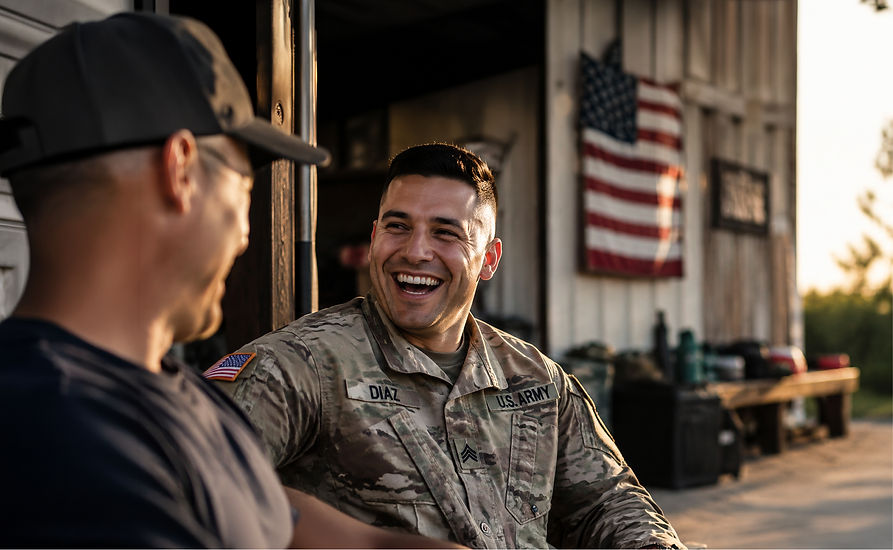
What Recognition Should Actually Look Like
Recognition should be automatic. It should be invisible. It should never require a veteran to announce their status, prove their identity, or negotiate a lower price at a counter.
That's the principle VeteranCrowd was built on.
Here's what it looks like in practice: A veteran signs up once. Verifies their military status once — through the VA API, which takes seconds. Links an existing Visa card. And from that moment on, every time they use that card at a participating merchant, they earn cash back automatically. No codes. No apps to scan. No conversations with cashiers. No ID to show.
The merchant sees a normal transaction at full price. The veteran gets a text: "You just earned cash back." Nobody in line knows. Nobody at the register knows. The recognition happens silently, privately, and with dignity.
That's not a discount. It's not a handout. It's earned — and it's delivered the way earned things should be delivered: without making you ask for them.
01
Link Your Visa
Securely connect your existing Visa credit card. Takes about 90 seconds. No new card, no new account.
02
Shop Normally
Pay however you always do. No extra steps, no discount screen, nothing that interrupts the purchase flow.
03
Get Your Cashback
We detect the purchase and automatically apply your veteran benefit. It shows up — you didn't have to ask for it.
The Difference Between a Discount and a Right
A discount is something you request. It requires permission. It can be denied. It depends on the goodwill and knowledge of the person standing across the counter from you. It reduces the price you pay, which means the merchant takes a hit on every transaction — and some merchants resent that, even if they don't say it.
Cash back is different. The veteran pays full price. The merchant earns full revenue. And afterward, the veteran receives cash back funded by the merchant as a marketing investment — not a margin sacrifice. It's recognition built into the infrastructure, not bolted on at the register.
That distinction matters. When a veteran receives cash back from VeteranCrowd, they didn't ask for anything. They didn't prove anything at the point of sale. They just lived their life, used their card, and were recognized for their service in the background.
That's what honoring service should feel like. Not a negotiation. Not a favor. Not something that depends on which
cashier you get or what day of the week it is.
This Needs to Change
We're not here to criticize merchants who offer military discounts. Their intentions are real. They want to support the community, and they put their money where their values are. That matters.
But the system those merchants are plugged into — the codes, the verification popups, the checkout friction, the inconsistency — was never designed with the veteran's dignity in mind. It was designed for operational convenience. And it has stayed that way for decades, not because it works, but because nobody built something better.
Until now.
The technology exists today to recognize a veteran's service at the payment network level — automatically, silently, and universally. No new card required. No POS changes for the merchant. No app to scan at the register. The infrastructure is built. The Visa relationship is in place. The patent is filed.
The only question is whether we're willing to stop accepting a broken system just because it's familiar.
What We Believe
We believe veterans earned their recognition the day they raised their right hand. Not the day they remember to ask for it at checkout.
We believe military families — spouses, children, parents who stood beside those who served — deserve the same seamless recognition, without the awkwardness of claiming a benefit tied to someone else's service.
We believe merchants who want to support the military community deserve a better tool than discount codes and verification popups that drive away the very customers they're trying to honor.
And we believe that when the technology exists to solve all of this — quietly, automatically, with no friction on either side — there's no excuse for settling for the way it's always been done.
Your service already earned it. You shouldn't have to ask.